

This article was originally published on my X blog on July 13th.
Does $DECK Clear Our Investment Checklist?
Right now, our portfolio is 3 names; Meta, LNG, Dave. I’m looking to diversify into something uncorrelated as a 4th name.
#1 Does it thoroughly diversify us away from our current 3 watchlist names (PGR, DECK, QCOM)?
PGR is insurance, Deck is shoe apparel (Hoka, Ugg). Neither should be very correlated to AI. However, PGR is tied to rates, and I believe investors would also correlate this to DAVE. So if rates go up or stay sideways, they both benefit, if they go down they probably get sold off to some extent.
Qcom is a strong company, but tied to Meta esp. considering Meta is one of their newly taunted hyperscaler customers. We’re already at-weight or over-weight Meta
You can argue PGR and Dave are slightly correlated since they’re both involved in lending to drive income, so rates matter. (oh I realized I already wrote this, anyways, worth noting)
Deck likely seems the least correlated to AI. (Unless Robots take over the planet and nobody needs shoes any more)
#2 Does it fit our Checklist criteria?

Out of favor: Qcom probably the most in favor, followed by PGR, followed by Deck as the least favored.
Moat: I’d say Deck probably has the least defensible moat given the nature of their industry. It’s a constant churn to remain on top, or get back to it. Cyclical in that sense; the cyclicality comes from consumer taste.
On a podcast I was listening to today, he said of the Shoe companies he’s aware of he’d “rather own Nike or VF Corp (Northface, Timberland, Vans).”
But comparing DECK to VF Corp... I’m missing it. First off, UGG & HOKA vs NORTH FACE & TIMBALAND & VANS is pretty fair fight. Both Ugg and Hoka have grown YoY for a decade, and most recently HOKA grew 16%. On the other hand, Vans declined revenue ~10% last year... and Northface grew, but 4% less than Hoka. Timabland only grew a standard 6-8%. So what am I missing?
Well, VF Corps’ Alta brand grew 50% revenue. Deck doesn’t have any assets growing at this pace. The market gets excited by that...
Claude says:
“Altra and Hoka are head-to-head competitors in premium running footwear — funny enough, both were founded around the same era of the running-shoe innovation boom, just with opposite philosophies: Hoka is maximal cushion, Altra is zero-drop with a foot-shaped toe box. The scale gap is huge though — Hoka did $2.59 billion in fiscal 2026, up 16%, while Altra is likely in the $300–400M range. But Altra growing ~50% while Hoka decelerates to projected low double digits is exactly the kind of David-taking-share-from-Goliath dynamic VFC bulls point to.
FY26 scoreboard is: TNF growing, Timberland growing, Altra up ~50%, Vans shrinking. Versus Deckers: Hoka +16%, UGG +8%. On pure brand momentum, yes, Deckers still wins — Hoka out-grew everything at VF except tiny Altra, and Deckers has no bleeder like Vans”
Hoka grew “only” 16%, but on a $2.2B base — that’s ~$360M of new revenue in one year, roughly Altra’s entire size
So, for DECK, what am I missing?
After digesting all that... here’s the core of what I’m missing:
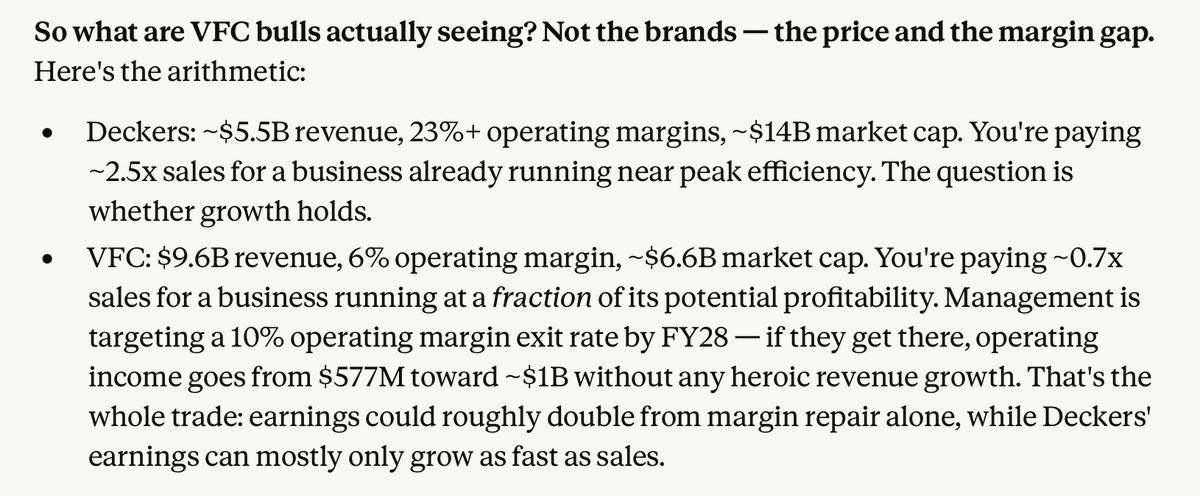
Put differently: DECK is a bet that a great business stays great. VFC is a bet that a mediocre business becomes decent. and you’re paying a mediocre-business price for it, with Vans stabilization as a free option on top.
This is a really critically important mindset to understand about markets.
Smart investors, more experienced than I, take the side of VFC. My gut says DECK, because “VFC only becomes cheap on hypothetical FY28 numbers: if they hit the 10% margin exit rate, that’s ~$1B of EBIT, and today’s EV works out to ~9x — i.e., you’d be paying for VFC’s future what the market lets you pay for Deckers’ present.”
DECK has no debt, and consistently performed for a decade on growth. VF Corp is a nightmare on revenue consistency to figure out (VF also sold SUPREME.. which I’d argue is their coolest brand), has debt, and is trading at almost a 50% (!!!) higher TTM P/E multiple.
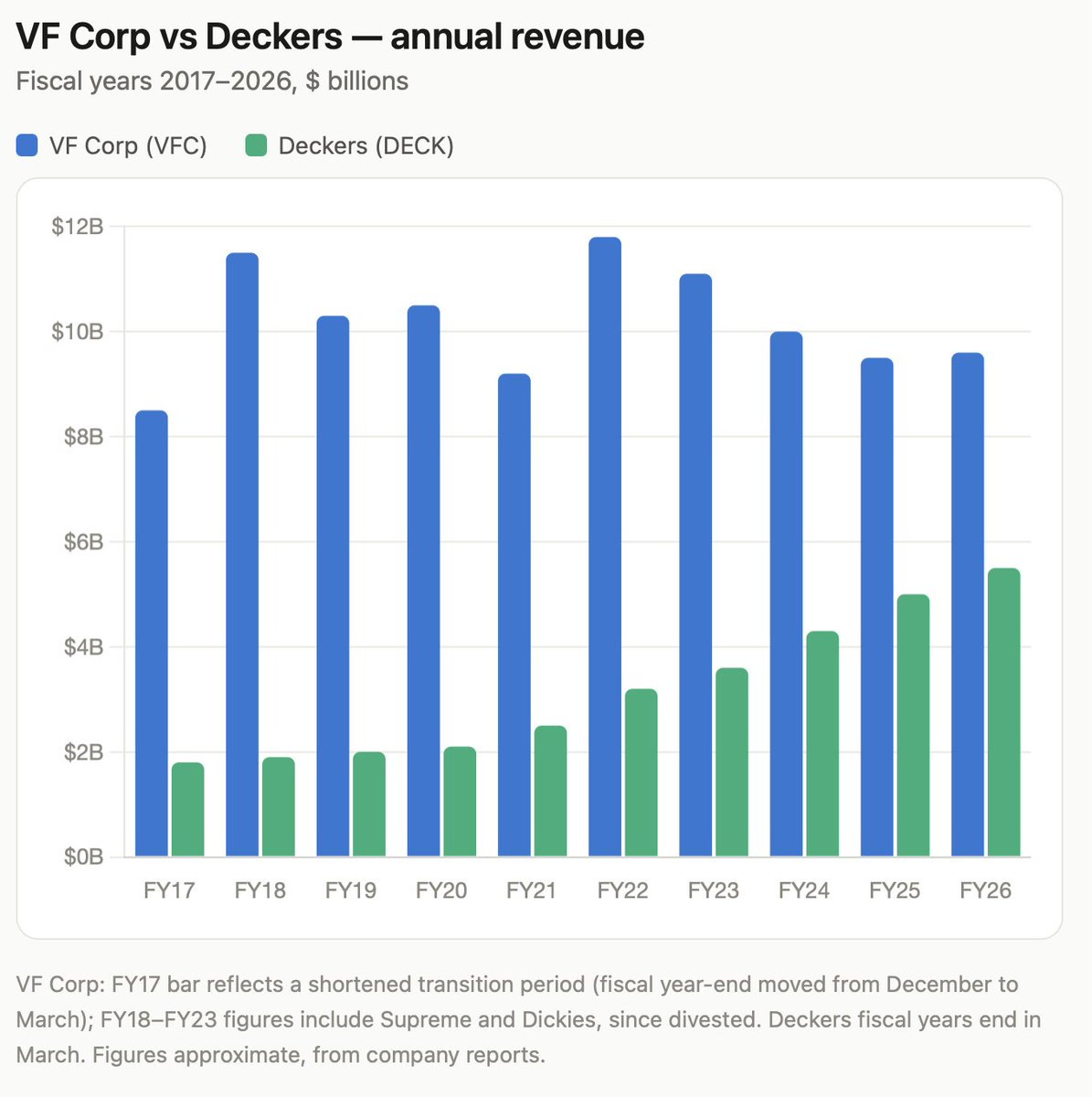
Ok.. so all that’s to say, I personally would rather own a clean story for DECK at an out-of-favor multiple.
DECK vs. NIKE
But... what about vs NIKE?
Right off the bat, the clear difference in my eyes are brand qualities. Everybody knows Nike. Nobody knows WTF Decker is... and only runners know HOKA. So if I look back at this day in 2035, I can see myself saying, “of course Nike is the strongest shoe brand in the world still! It’s fkc*ing NIKE!”
However, I could also see myself saying, “Incredible what that CEO did with Hoka over a decade. $10B’s in sales, $ B’s in profits, and expanded into multiple diversified shoe categories with consumer name labels.”
Both of those are on the table for now.
Looks like Nike trading about 25-30X owners earnings, and 21 P/E. Where as DECK trades at 15x Owners earnings, and if we factor in EV (fortress balance sheet re no debt), then we’re down to 13-14X.
Roughly 6-8% Yield, plus growing 10%+, plus strong margins/ROIC.
Where have I seen this story before.... hmm..... ADOBE!
And that thing fcking tanked despite the solid fundamentals.
With Adobe, we were asking:
“Will technology permanently change this business?”
With DECK, we’re asking:
“Is this just another fashion cycle?”
If DECK/HOKA becomes a durable global athletic brand - more like Lululemon or Nike than a temporary running trend - the current valuation could prove too low. If HOKA eventually plateaus and UGG keeps maturing slowly, then today’s multiple is probably fair (still think it’s kind of on low end, just bc the growth doesn’t mean the brand is done... they’ve been around since 1980s!!! (I also said this about ADOBE....) Getting some red flags here just based on my mistakes with ADOBE. It’s not that it was a bad biz.. it’s just that the opportunity comes from extreme patience to wait for ridiculous like 7-9x multiple. When the bad news is already fully baked in.
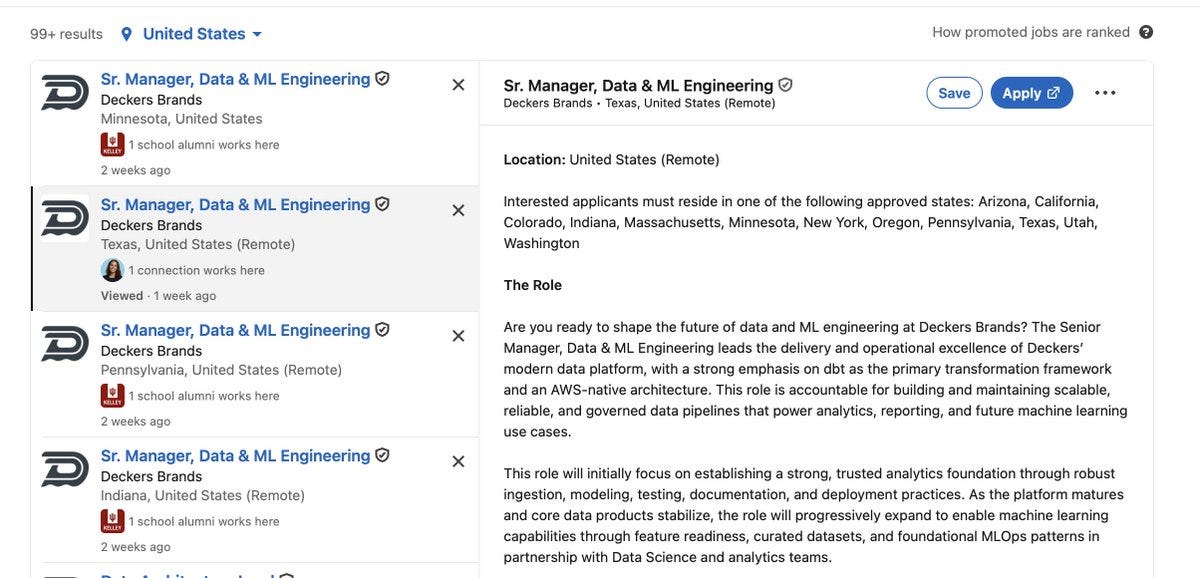
BTW.. good sleuthing online for their tech trends in DECK... looks like they’re thinking about ML and analytics.. but probably behind.
CEO Comps: NIKE v DECK v VFC
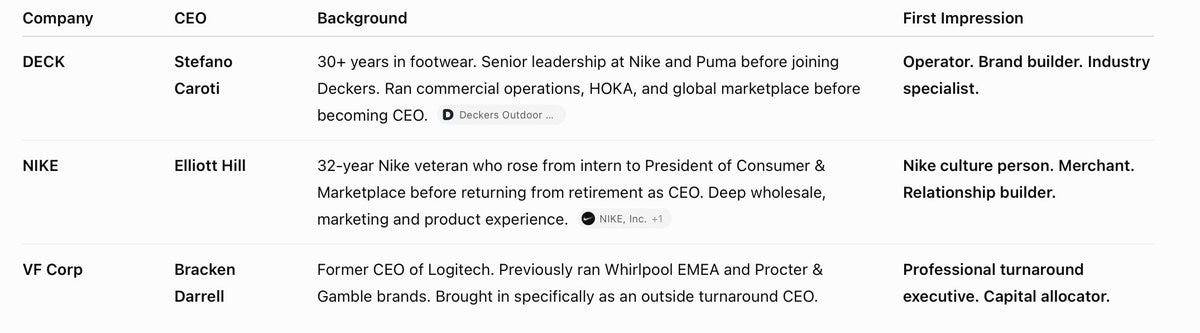
Stefano has done great in 2 years. +1
And Bracken is built to turn around.. +1
For VF Corp, this is why Bracken’s hiring mattered
The board wasn’t looking for someone to invent a new apparel category.
They wanted someone who had already proven he could:
simplify a bloated portfolio,
improve execution,
rebuild brand desirability,
and restore profitability.
That’s almost exactly what he did at Logitech.
By the time he left Logitech as turnaround CEO: Revenue had more than doubled.... Market cap increased roughly 10x!!!
Ok.... but I just looked at VANS website.... my lord help save them. Oye. I cannot figure out what they’re going for. I took screenshots from their website and made this... they’re all over the place.
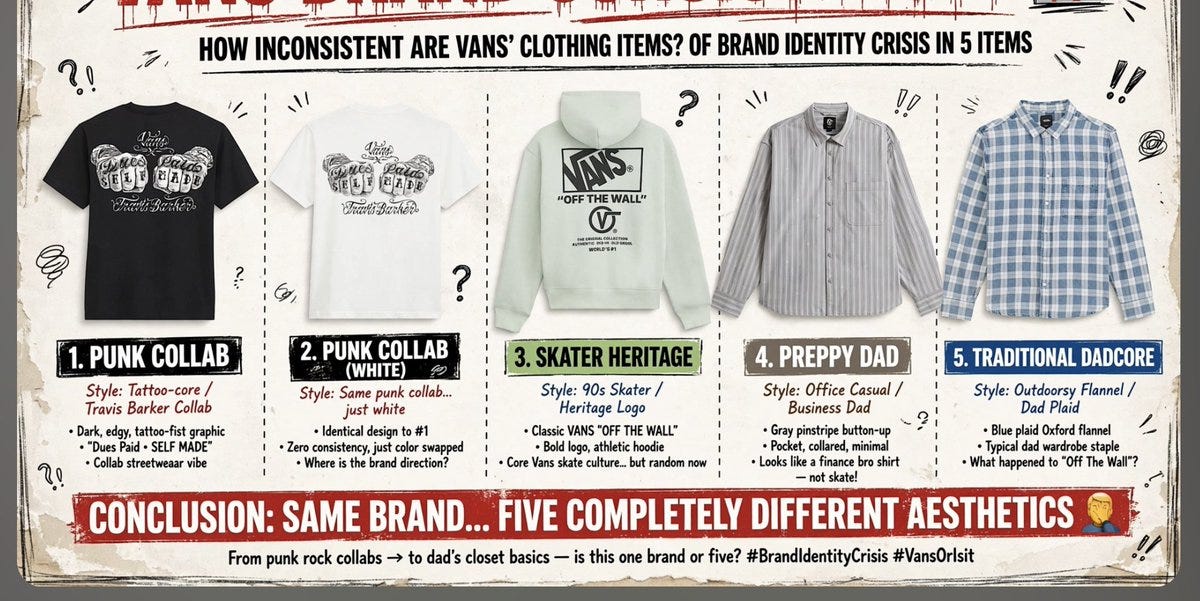
😂😂 Vans just gave us punk → skater → finance bro → dad all in one shopping page.
Maybe Vans works out.... I don’t think this is a bet I’d believe in enough. However, I’ve been buying UGGs for 20 years... new slippers every year or two... and HOKA for 5-8(?) years... whenever I need a new workout shoe.
So.. for me personally, there’s just now way I could justify buying Nike or VF Corp over DECK. Not when numbers, execution, and personnel beliefs are on one side. I think DECK is a great buy, and if it tanked 25% I’d be all over it. But... it’s still floating.. so let’s now comp it back to QCOM and PGR.
And also, I’ve got to admit that LULU or URBN also have cases to be made for them. And I don’t think I’d want all three.. so I’d need to also deep dive between DECK LULU and URBN. One strategy would be index them now, sell the ones that go up and buy more of the one that goes down. But hm.. I’m trying to run a concentrated simplified portfolio of 6-8 names.
So I think I might be better off examining PGR since I know it the best based on studying the insurance market a lot over 6 months.
But, let’s keep doing the checklist comps for now....
Low + No Debt: Net Debt +5B Qcom, +8B PGR, -1.5B Deck (0% debt-to-equity ratio, that’s a strong quality to have for physical goods company).
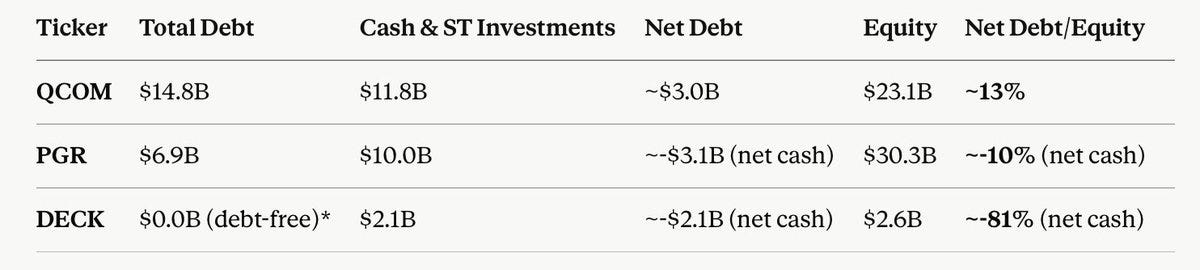
Profitable: Qcom 22% NI margin, Deck 18%, PGR 12%
Pricing Power: Price x Volume:
PGR is charging slightly less for new policies but doing more volume, volume is growing 8% YoY. April showed Total policies in force reached 39,767 thousand at April 30, 2026, up 8% year over year, led by growth in direct auto and special lines, and May showed total number of policies in force increased by 8% to 39,970, driven by growth in personal and commercial lines. Policy count growing faster than premiums is a good sign — it means growth is coming from more customers, not just rate hikes, but it also could imply that margins take a slight hit to optimize for overall volume.
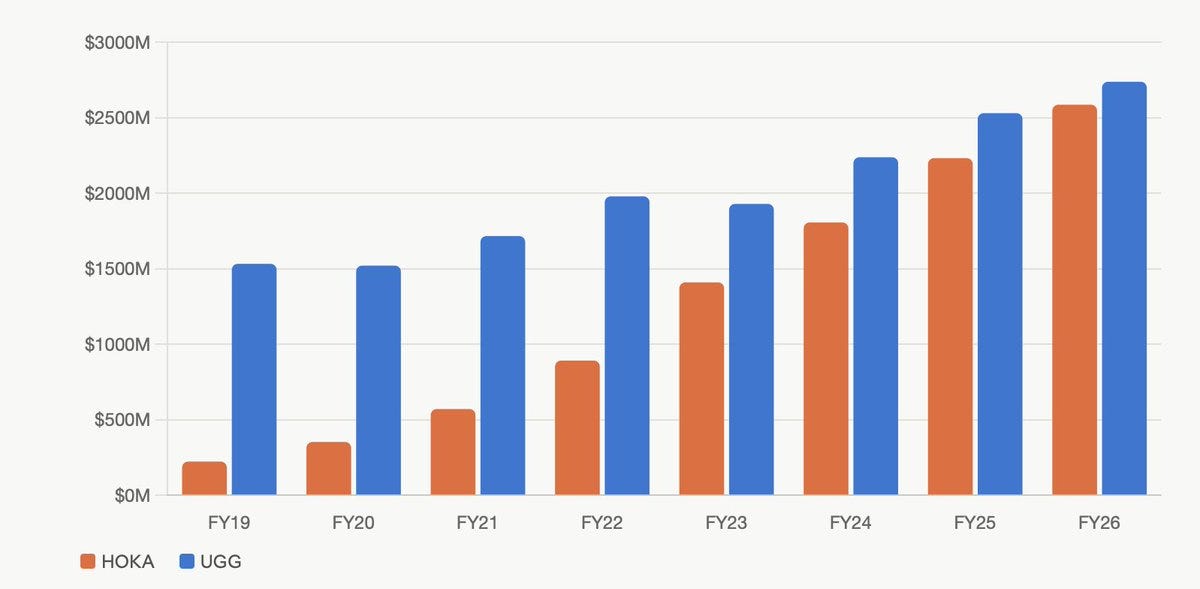
DECK showing incredible strength with HOKA. Ugg cash cow. Btw, HOKA largest indie Rival, Brooks Shoes, is a company owned by Buffett. (btw, Nike has more debt, higher multiple, and less consistent operating cashflows).
Qcom’s core biz is in decline b/c Apple is moving in-house, but their Auto is growing crazy fast, 35%, and their handset division should be 1/3 of revenue in the next couple years, that’s a great improvement as they shift into CPU heavy datacenter, edge compute, etc...
Founder Led:
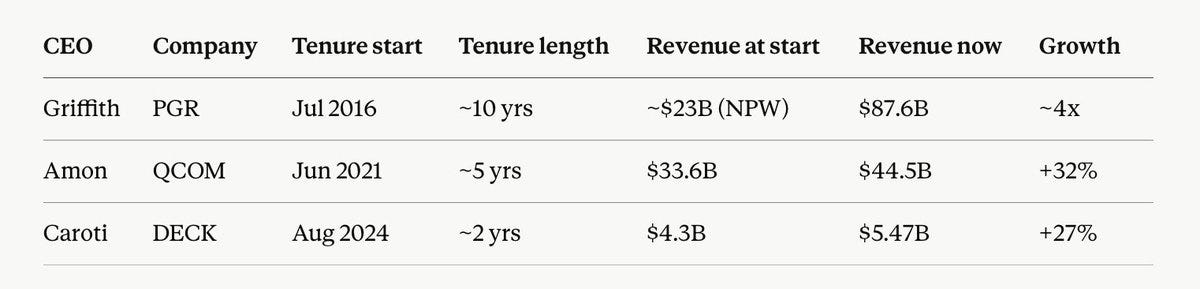
None of these are founder led sadly. VERY Impressive CEO track record from PGR. Tricia Griffith
Tenure: CEO since July 1, 2016 (~10 years). Joined Progressive in 1988 as an entry-level claims representative — a genuine 28-year rise through the ranks (Chief HR Officer, Claims Group President, Personal Lines COO) before becoming CEO.
Revenue track record: This is the standout. Progressive’s revenue has grown from roughly $23 billion in net premiums written when she took over to $87.6 billion in total revenue in FY2025 — close to a 4x increase over her tenure. She was named Fortune’s Businessperson of the Year in 2018, just two years into the job, for this performance.
Stock/scale: Progressive is now the #2 U.S. auto insurer (~16.7% market share) with an
market cap, up from a much smaller, third-place player when she started.
Other mentions... DECK CEO prev. ran Nike EMEA and Puma as well. He started with Nike in 1993... so shoes are all he knows, and these $5B revenue Shoe businesses are all he’s done his whole career.
Cristiano Amon. Tenure: CEO since June 30, 2021 (~5 years). Joined Qualcomm in 1995 as an engineer, became President in 2018 before ascending to CEO
Theme Decade-Long:
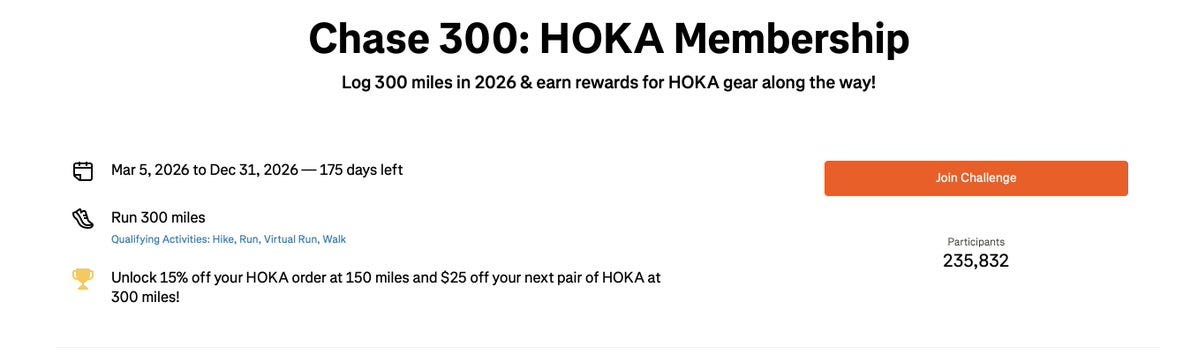
DECK definitely has the ‘athleisure’ trend, and hopefully a get-fit trend. They have 240K participants on their Strava Challenge. Runners love one another.
Zone of Competence:
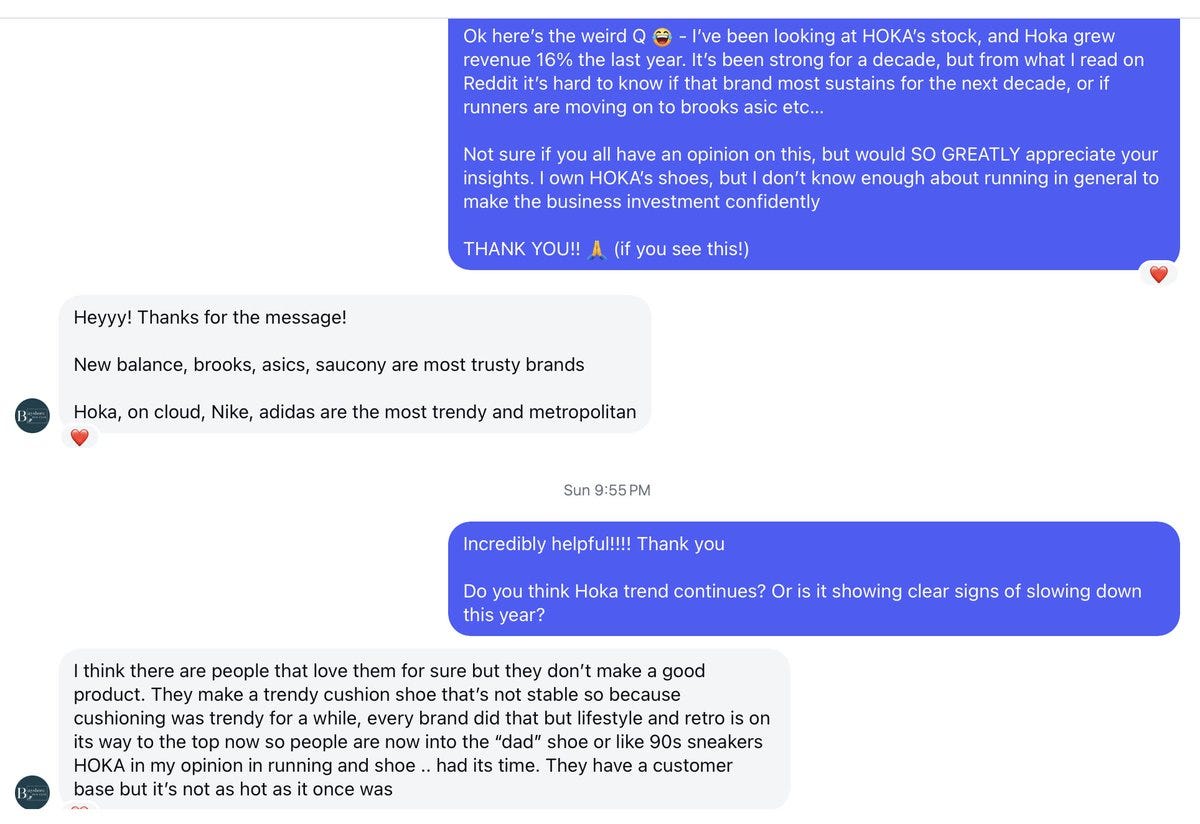
If you understand whether HOKA’s growth holds up and whether UGG keeps its pricing power, you understand the stock. BUT.. nobody can understand that, and, from the minimal insight I can gleam into HOKA... it appears it’s losing a bit of its grip. But.. I have no clue.. I just cold messaged a run-club on Instagram that kinda know.
You can’t predict the brand success.. but you do know ppl will need to keep buying shoes, and they have some of the strongest operating margins in shoe apparel, plus 0 debt, 1.5b cash, a CEO proving themselves 2 years in a row, and a margin of Saftey on PE.
I think it comes down to LULU v URBN v DECK.
Due Diligence
So... I even messaged Run Clubs on instagram asking about trends, and Hoka momentum. This is the common answer I see online, and in small research sample, ‘had it’s time.’
And the whole thesis on DECK is that it keeps growing 16% YoY rev with Hoka brand. Though, even if it drops to 10% you’d still get your money back in 10-14 years. But... I don’t think I want to own Hoka and Ugg for 10 years. Although, if I think about it, there’s a high probability I’ll still own Ugg in 10 years. I just buy new pairs of the same slippers when they get worn. But Hoka... I actually think the cushion causes more headaches than it solves because they’re not as stable for balancing exercises, and they don’t strap in to bikes/rowers very well (they’re so bulky).
So unfortunately, I think this DECK is a pass for me. And it’s already up 7% since I started writing this article a few days ago. But oh well, I just don’t buy the decade-long trend here.
Checklist
“”No wise pilot, no matter how great his talent and experience, fails to use a checklist.”“ MUNGER
Here’s some notes to myself that I re-read before investing:
You gotta pick. And you gotta pick right.
The point of investing is to always be able to take advantage when prices are attractive
If you wake up and think the market is bringing you opportunities rather than you are giving advice from the market, you’ll be successful
The market is the most abiding thing in the world if you just let it be. Unless it’s a great deal in a great price do not buy it.
The price almost ALWAYS finds its way lower somehow to your buy price. You keep thinking it won’t happen, or you’ll miss it, and you trick yourself into thinking the solution is “just buy it now.” That is a shitty fucking reason to buy something.
Just get to know a COMPANY (not just a moment of opportunity) really really well. Then apply common sense to it.
———
Value is the # if you’re all-knowing about the future and could predict all the cash, discounted at proper discount rate, that is value of a business — in other words the only reason to lay out money now is to get more later on. The cashflows are printed on a bond. Not on a stock certificate.
Warren Buffett’s method: find 1-2 factors that make or break the business, study historical numbers obsessively, and set a simple target — “I want 15% on this investment, day one.” No DCF models required.
~DON
