

[WEEK 42/52]: Today is about a person who changed my life for the better, 11 years ago. And did it again this week. I hope you leave today’s newsletter feeling like you should push yourself that extra 2% today to help yourself, and someone else.
[TOPIC]: Today’s newsletter is reminding you that YOU MUST GO THE EXTRA 10% to differentiate you from the other thousands of people who are trying to accomplish your same goal.
Dear Mystery Person,
(you know who you are)
I can point to our happen-stance meeting 11 years ago as the beginning moment of my pursuit of VC. Your lessons about ‘just show up’ and ‘do what you want’ were some of the greatest gifts I ever received.
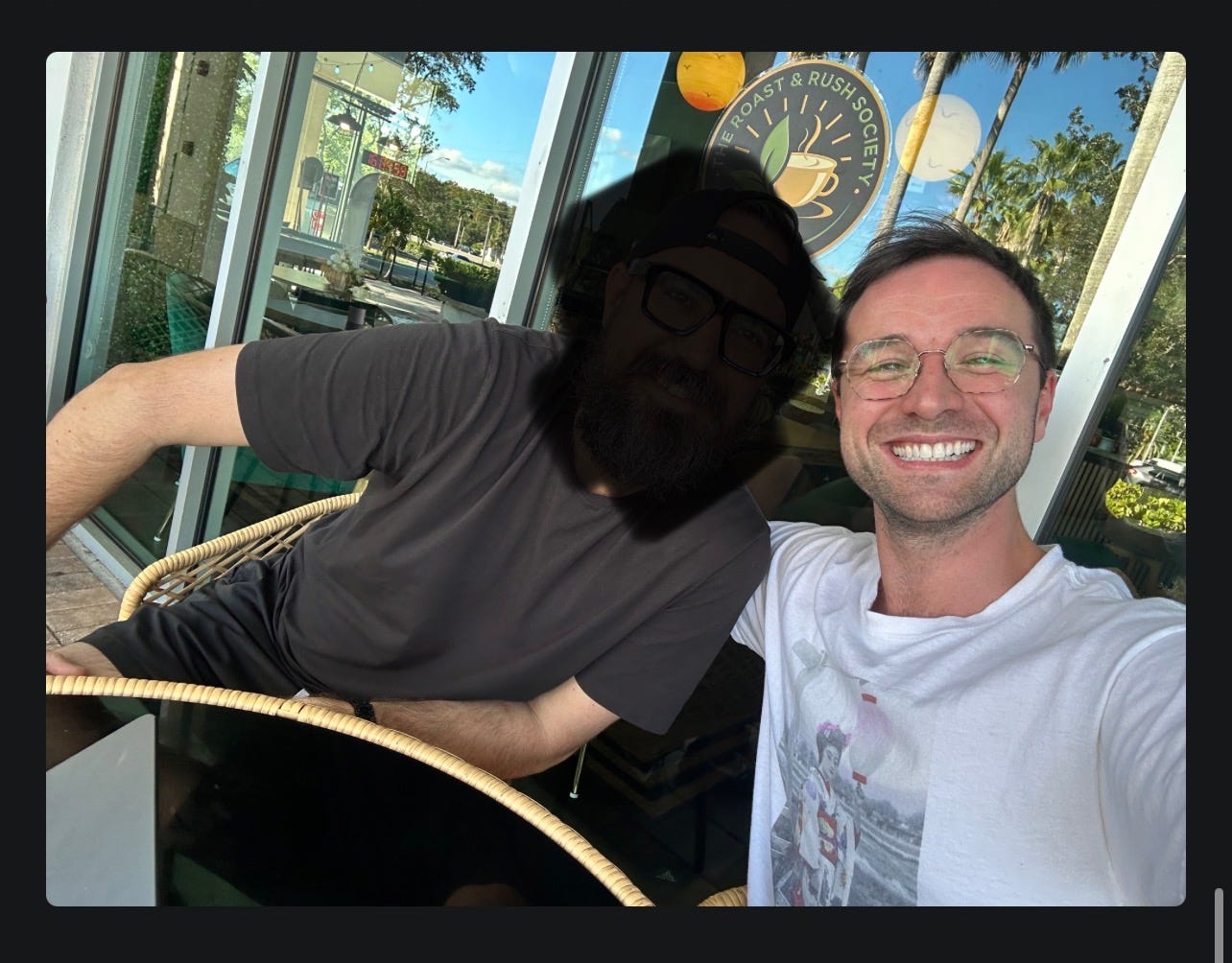
2015: Time travel to March, 2015.
I’m 21 years old.
No job.
No credibility.
No particular expertise.
No network.
Just a kid with an unreasonable amount of ambition, very little idea what he was doing, and a laptop.
Naturally, I thought I was going to change the world.
I just wasn’t sure how.
One weekend, I went to Starbucks in Naples, Florida, to work on some random startup-related stuff.
Sitting nearby was another guy on his laptop.
I overheard him talking about startups, Techstars, and venture capital.
Now, this was Naples, Florida.
Not Silicon Valley.
Not New York.
Naples.
A place where the average conversation at Starbucks was considerably more likely to involve golf than venture capital.
So I turned to him and said something along the lines of:
“Hey, I like startups too.”
An exceptionally sophisticated opening line.
And that was it.
One sentence that changed the trajectory of my life.
The stranger turned out to be a guy named Bronson Taylor (personal website: www.bronsontaylor.com)

And unbeknownst to me, I’d stumbled upon one of the most startup-obsessed, growth-hacking, internet-building people I could have possibly met in Florida.
In Naples Starbucks, of all places!
He was working on a startup and applying to Techstars.
He would eventually get accepted.
But what I remember most wasn’t his startup.
It wasn’t his credentials.
It wasn’t even his advice.
It was the genuine feeling that he believed in me.
1. He believed in me before there was much reason to.
At 21, I had plenty of enthusiasm and very little evidence that I was capable of doing anything particularly impressive.
Bronson didn’t seem bothered by that.
His attitude was essentially:
“Yeah, of course you can do anything. Why wouldn’t you? Go do it.”
Not in some manufactured motivational-speaker kind of way.
He genuinely seemed to believe that people could just go out and build things.
And that I could be one of them.
It was incredibly refreshing.
For perhaps the first time, I met somebody who thought it was perfectly normal to spend a weekend sitting in a coffee shop working on a startup that might amount to absolutely nothing.
He was doing it for the love of the game.
And I think he recognized that same enthusiasm in me.
That’s something I’ve never forgotten.
Sometimes the most important thing someone can give you is permission to go for it.
Not literal permission, of course.
But the confidence to believe that your ambitions aren’t ridiculous.
Or, at least, that being ridiculous shouldn’t stop you.
2. He encouraged me to fly to San Francisco for the first time…
At this point in my life, I knew I wanted to work in investing.
I just didn’t know exactly what kind.
Wall Street? New York?
Private equity? Chicago?
Venture capital? San Fran?
I’d spent that summer listening to Barbarians at the Gate approximately 20 times.
(Famous PE book about hostile takeovers)
Wall Street seemed snooty - I hate wearing a suit.
Private equity seemed too debt-dependent.
And venture capital?
Well, venture capital sounded awesome.
You got to hang out with ambitious founders building futuristic things, talk about exciting ideas, and potentially make a lot of money.
Sign me up!
I was particularly obsessed with virtual reality.
And there was a venture firm in San Francisco called Rothenberg Ventures that had a VR accelerator I desperately wanted to work for.
One small problem.
I was a 21-year-old kid in Naples, Florida, with no relevant experience and no meaningful connections.
Not exactly the résumé Silicon Valley was waiting for.
Somehow, during our conversation, the idea came up that I should simply show up.
Literally.
Show up.
Go to San Francisco.
Walk into the office.
Introduce myself.
I don’t remember exactly whether Bronson was the person who explicitly suggested it.
Eleven years is a long time, and my memory isn’t exactly a steel trap.
But I do remember how that conversation made me feel.
And that it motivated me to get off my butt, and go for it.
For those of you who know me, you know that’s my M.O.
That doing something slightly unreasonable wasn’t necessarily unreasonable.
That you didn’t need to wait until somebody invited you.
That if you wanted something badly enough, you could just go after it.
And sometimes the difference between the person who gets the opportunity and the person who doesn’t is embarrassingly small.
It’s not the person, it’s the effort.
One extra email at the right time. One extra phone call. One extra conversation. One extra plane ticket.
The additional effort often isn’t difficult.
It’s just unusual.
And, feels risky.
Most people stop when they’ve done what is expected.
And remarkably often, that’s where the opportunity begins.
I rushed home to tell my parents all about this incredible guy I’d met.
My mom still remembers him to this day.
Although she doesn’t quite remember his name.
“Whatever happened to that Starbucks guy? Branson?”
His name is Bronson.
My name is Brandon.
And my Momma somehow combined us into Branson.
Like Brad and Angelina, Brangelina.
Except considerably less glamorous.
Anyway.
That was 2015.
2026: Fast-forward eleven years.
It’s last Monday, October 12th, 2026.
I have a very important appointment.
Not with an investor.
Not with a founder.
Not with somebody who might change my life.
My dog needs blood drawn for his annual heartworm test.
Very glamorous stuff.
So I drive approximately 45 minutes to the veterinarian.
There’s a random little café next door.
I figure I’ll grab a coffee and get some work done while I’m there.
I walk inside.
There’s one other customer.
Just one.
Some guy sitting at a table, cranking away on his laptop.
I order my coffee.
The woman at the counter compliments my dog.
Naturally.
He’s adorable.
She compliments me.
Naturally.
I’m adorable.
When I return to collect my coffee, I hear a voice.
“...Brandon?”
I look up.
The guy at the laptop is staring at me.
And then…“Dude, it’s me, Bronson!”
ARE YOU KIDDING ME?!
Eleven years.
Thousands of days.
Countless coffee shops.
And here we are.
Two guys who independently decided to bring their laptops to a random café and work on their own projects.
Again.
The exact same scenario.
The exact same person.
The same stranger.
This time, familiar.
Just eleven years older. And both of us with a longer beard.
(We’d actually hung out for lunch about five years to catch up, but still, fate).
What are the odds?
We start catching up.
He tells me he gets my Monday emails.
“Wait, you actually read those ?”
Apparently somebody does!
Fantastic.
So I run off to handle my dog duties, and we schedule a meeting for 48 hours later.
When you operate like he and I do, 48 hours is a longggg time. A lot can happen.
3. The love of the game
Two days later, we sit down.
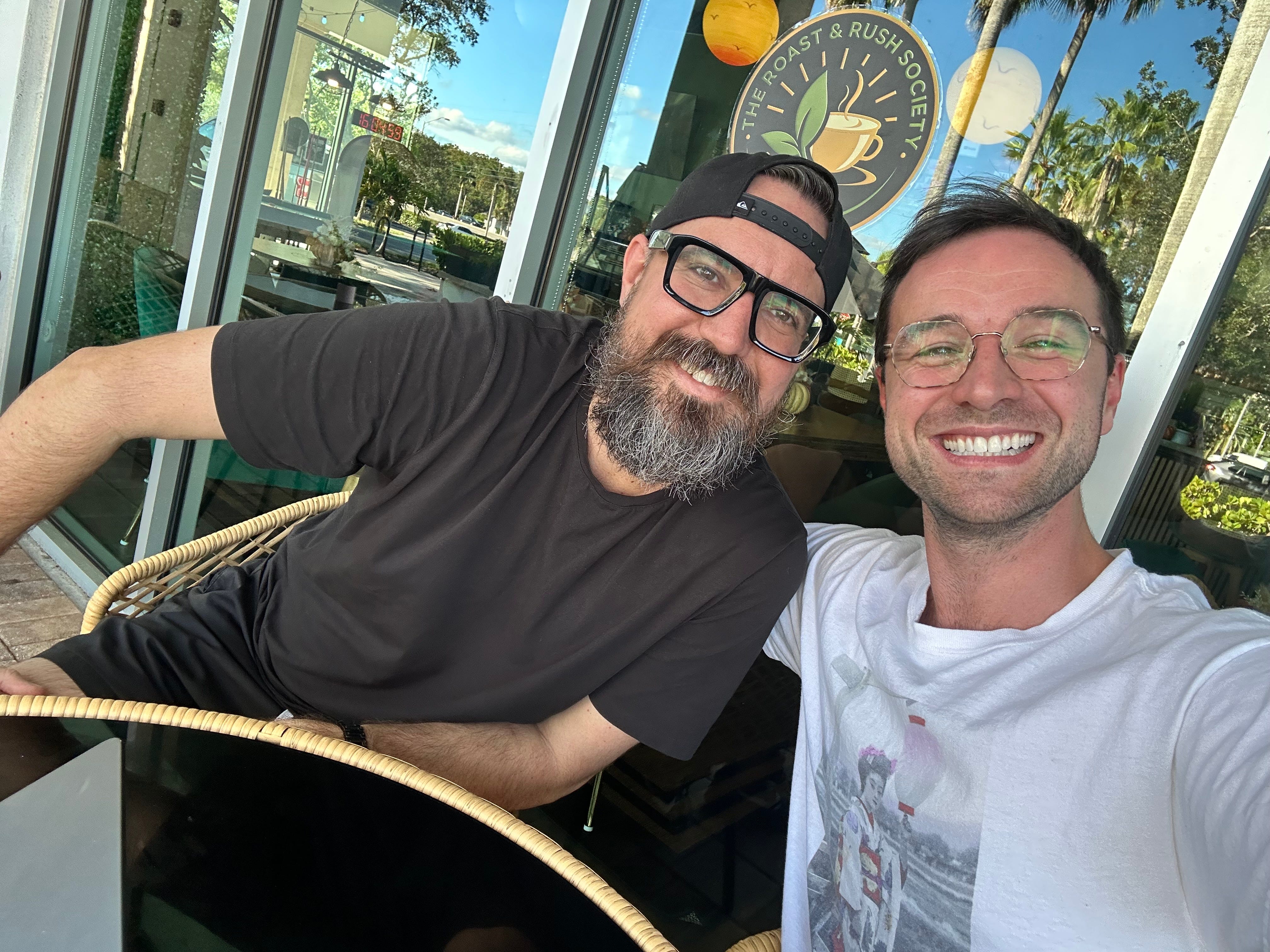
I ask Bronson what he’s been building.
Now, here’s something I’ve noticed about exceptional founders.
When you ask average people about what they’re working on, they tell you about it.
They explain the market.
The business model.
The opportunity.
The strategy.
And sometimes they’ll explain it for so long that you start dozing off.
But the really exceptional builders?
They show you.
Bronson immediately pulls out his laptop.
And begins showing me what he’s built. And, how it’s generating profit.

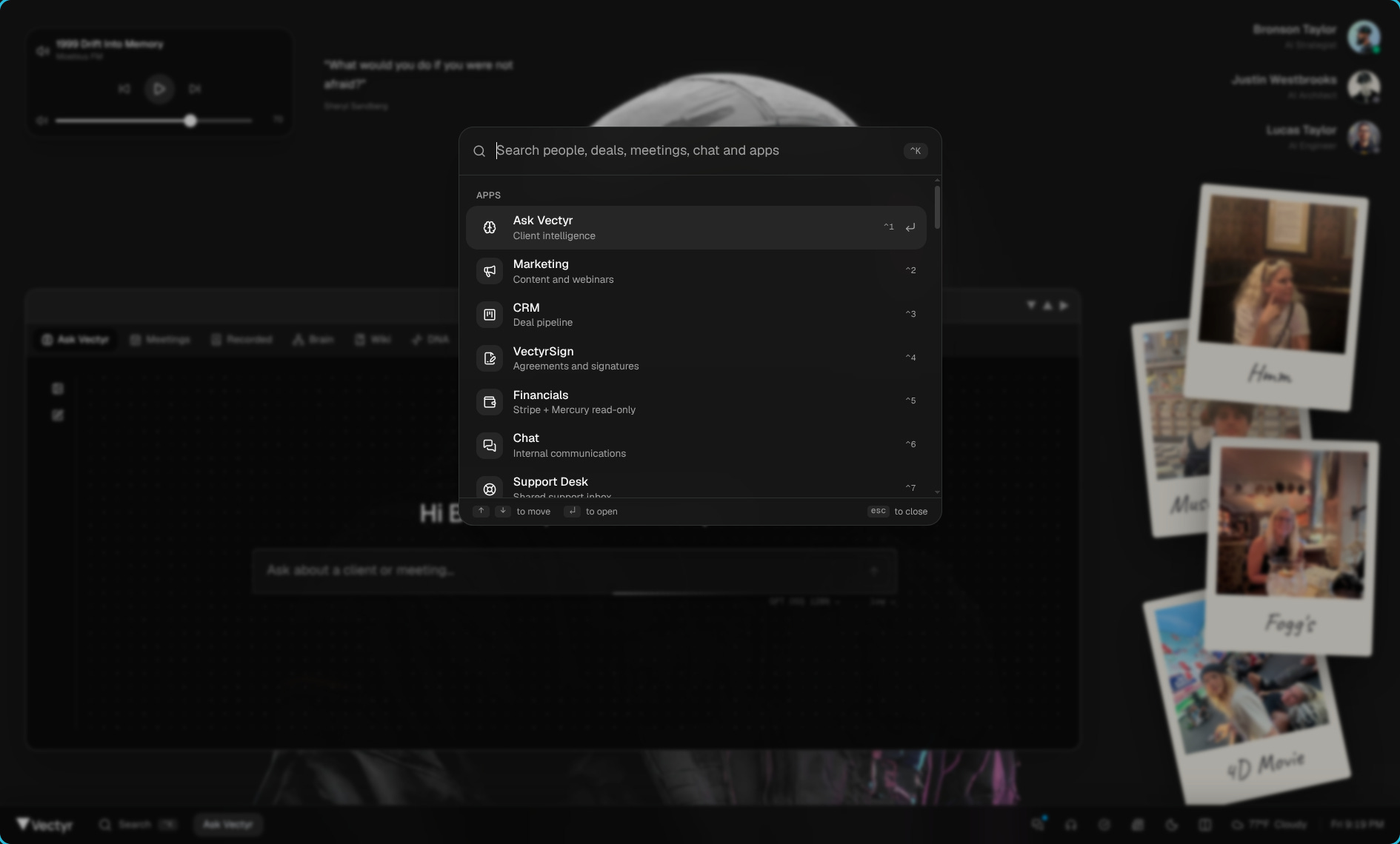
Now he built about 50 things with AI for clients, but what he built for his own company operations was by far the most unique… his own operating system.
Let me repeat that.
HIS. OWN. OPERATING. SYSTEM.
Not an application.
Not a website.
An entire custom computing environment.
He’d purchased a Linux laptop and built his own personalized operating system.
Not Apple Mac OS.
Not Windows OS.
Rather, Bronson Taylor OS.
His own menus.
His own interfaces.
His own workflows.
Everything customized down to the system level.
And it was collaborative.
His brother and business partner could work LIVE inside the environment alongside him.
He’d effectively assembled his own versions of functionality you’d normally associate with Slack, ChatGPT, Chrome, and other productivity tools.
All integrated into one custom system.
And everything on the computer is fully enabled by AI.

I’m sitting there thinking:
Who the heck wakes up one morning and decides to build their own Linux based operating system?!
And the best part?
He didn’t do it because somebody hired him to.
He didn’t do it because a VC told him the TAM was enormous.
He did it because he thought it would be useful.
And because he could.
For the love of the game.
The same reason he was sitting in Starbucks eleven years earlier.
The technology had changed.
The ambition hadn’t.
And now he has a FULLY CUSTOM computer, built on Linux, backed by an AI brain built custom with GPT + Cloudflare.
Message Bronson:
I receive no $ and no benefit, but if you’re working with a big company, I HIGHLY RECOMMEND you reach out and chat with Bronson about what AI can do for you.
SaaS is Custom.
Bronson is deploying enormous numbers of AI agents using infrastructure into traditional companies.
Agents processing data.
Agents completing tasks.
Agents working with other agents.
I’d imagine he has 10,000 agents working for his clients, at least.
Work that historically might have required entire teams of employees.
And he’s doing it for existing, traditional companies.
Not just shiny Silicon Valley startups.
Although, his client list has plenty of brand names in Tech.
You can see Google, Delta, Microsoft, Nike, etc…

Iconic businesses.
All in need of help with workflows.
The types of companies that have been using the same software for twenty years.
The kind of software where you click a button and briefly wonder whether Windows 95 is still running somewhere in the basement.
And Bronson’s approach is fascinating.
He isn’t ripping out the company’s existing technology.
He’s building an intelligent brain behind it.
Employees continue using the exact same workflows.
The only difference, is now behind the scenes, AI systems begin performing work that used to require enormous amounts of human-brain power.
He’s modernizing the brains of legacy software without replacing the body.
And that leads to a concept he shared that I haven’t stopped thinking about.
“SaaS isn’t dead. The future is custom SaaS.”
Think about that.
For decades, software companies have built one product and sold it to thousands of customers.
Now, they’re going to build thousands of products and sell it one-off per client.
In the old model… customer adapts to the software.
But what happens when AI makes it dramatically cheaper to customize software?
What happens when every company can have technology designed around its own operations?
Its own employees?
Its own processes?
Its own problems?
Instead of paying for a generic software product that does 80% of what you need, perhaps you pay a recurring fee for software that does 99% exactly what you need.
Down to where the buttons are placed.
Software built for the business, instead of the business built around the software.
That’s an intriguing idea.
And it comes with a fascinating question for investors.
If building software becomes dramatically less expensive, where does the economic value migrate?
To the businesses implementing AI to increase margins, NOT the businesses spending $25 billion on datacenter and paying 15% [cough Coreweave cough]
My thesis is Banks, Finance, Insurance, Medical, and Manufacturing companies.
Those companies benefit immensely from enhanced process automation, and intelligent moving of numbers.
Those are the companies where AI can move a few numbers around in a spread sheet, and vastly improve metrics.
I suspect this is going to be an enormously important question over the next decade.
And then, he tells me to open MY laptop.
For the past several months, I’ve been using AI to build my own investment software.
While I’ve made incredible progress, there have also been countless moments when I wanted to throw my computer into the ocean.
And if I didn’t have to go swim after it with the Sharks, I would have.
I’ve struggled with infrastructure and accuracies of enabling my underwriting with an AI brain.
He immediately starts walking me through his approach.
We download the ChatGPT desktop application.
He configures it.
He shows me how it works with Cloudflare agents.
And then we begin moving my application toward that infrastructure.
Except here’s the incredible part.
I’m watching AI actually use the computer.
Moving the mouse.
Navigating websites.
Clicking through interfaces.
II’ve seen people on X talking about agents, automation, coding, and supposedly revolutionary new workflows.
But there’s an enormous difference between watching a video of somebody doing something and sitting next to someone who makes it happen on your laptop, with your use case.
It’s like watching somebody cook on YouTube versus being invited into the Michelin star restaurant.
Suddenly, all these ingredients you’ve been staring at for months begin making sense.
And you’re thinking:
WAIT. I CAN DO THAT?!
And now…. over the past weekend, I trained 50 agents, deployed them, tested, and my Agentic system underwrote 191 companies in my accounting style.
That’s 18,000,000 tokens used over 48 hours, for only $75.
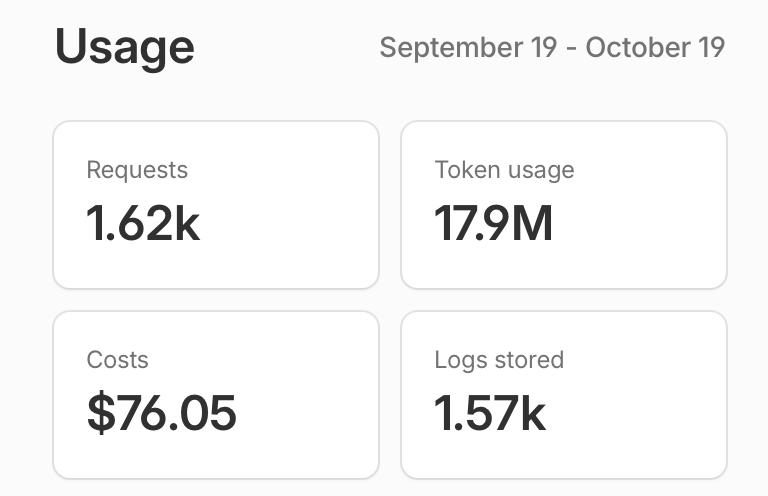
Best part, it’s doing this for $0.18 per company, and then my master agent (who I call Buffett) triple checks that work for an additional $0.11. A whopping 30 cents and 8 minutes… to do what used to take me 2 hours per company.

You read a lot about Anthropic’s cost…. yuck.
That’s why I’m using GPT and Cloudflare.
DO NOT get ripped off by Claude.
You absolutely can build powerful AI for extremely cheap.
He Gave This Gift to his Kids
He didn’t just teach me.
Bronson’s three kids (13, 13, and 19) are also building with AI.
And VERY IMPRESSIVELY.
I remember being 19 and starting my first company, the LegendsCard App.
Serving discount to our local college campuses.
That required ~$8K, split between 5 founders, each paying in $1-2K just to get some junky app going.
And here, his son, was able to build something 10x more impressive, for -10x the price.
At age 19 when I was probably still figuring out how to convince my parents to buy me shoes, Bronson’s son is selling AI services, and launching his own consumer apps.
He introduced me to his son, and man am I impressed!
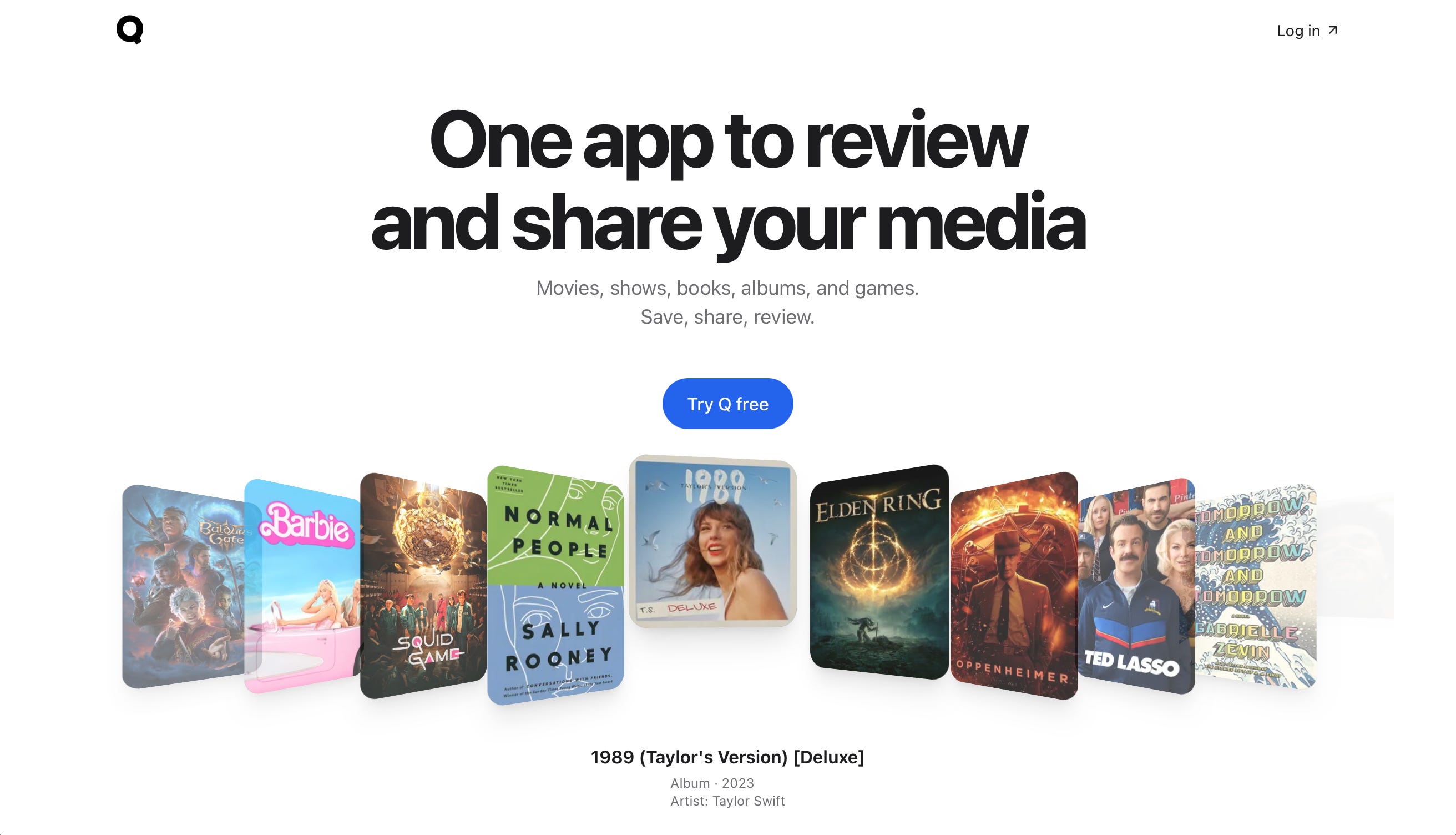
I signed up and added my interest for books, and already found one I should read.
He also covers movies, and all types of media integrated directly into an API feed.
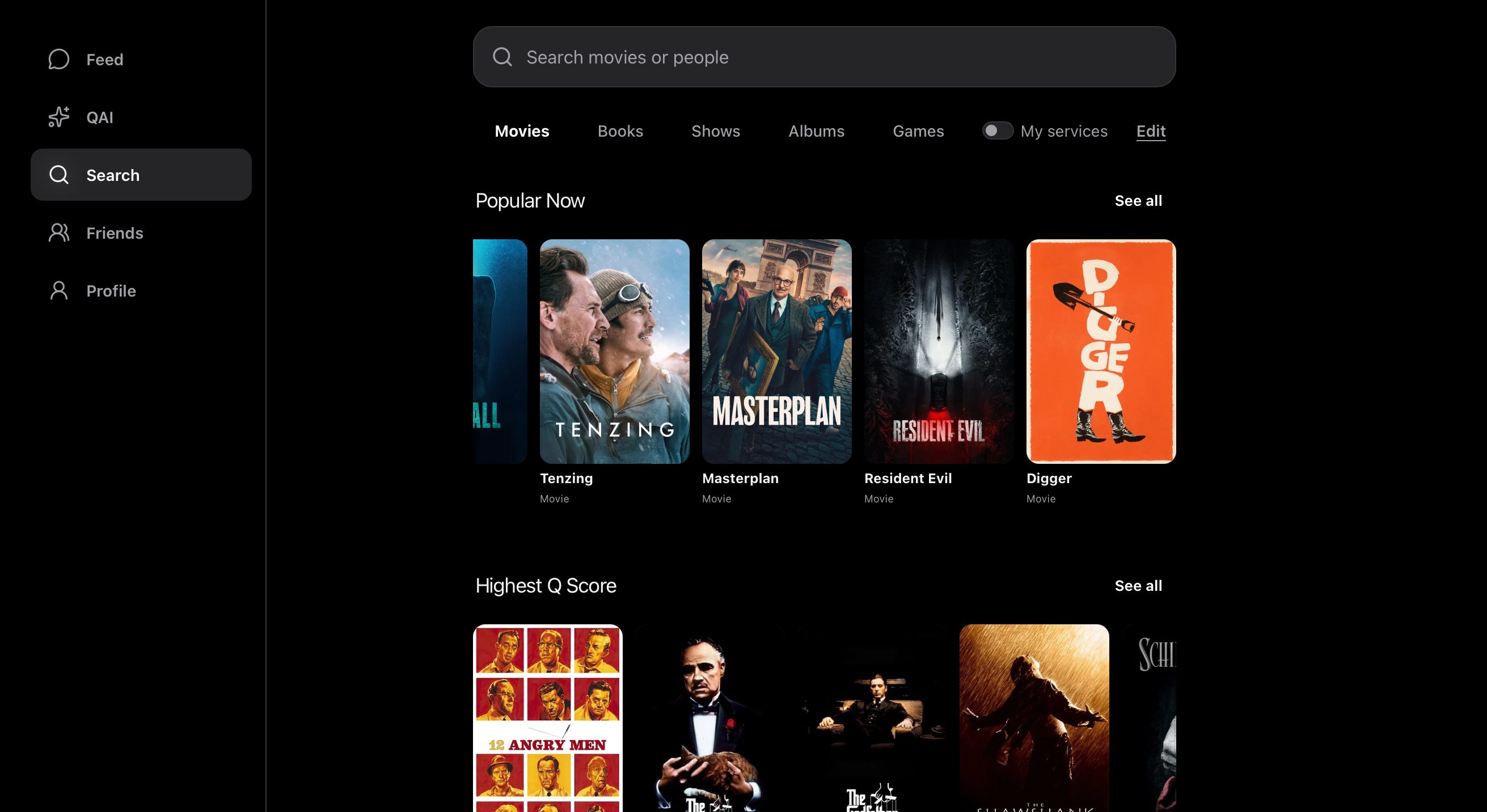
What an extraordinary time to be alive.
Links:
Here’s Bronson’s website: https://vectyr.co
Here are Mikah’s website: https://qmedia.app
ROC: ‘Return on Convo’
I’ve spent a lot of time thinking about that coffee meeting from last week.
Not just because of the technology.
Although the technology was incredible.
But because of how familiar the whole experience felt.
In 2015, Bronson showed me a world I didn’t fully understand.
He gave me confidence.
He showed me what was possible.
And he encouraged me to take action rather than wait for permission.
In 2026, he did practically the same thing.
Different technology.
Different chapter of life.
Same mindset.
Believe in what’s possible. Build things. Show people. Keep learning.
And I think there’s a much bigger lesson in that.
The people who have influenced me most have always first and foremost believed in my unknown.
They’ve been the ones whose enthusiasm is contagious.
And I have the ability to run with that enthusiasm for years, as do you.
The people who make you feel that whatever you’re trying to accomplish is not just possible, but worth attempting.
I spend a lot of my life thinking about returns on capital.
How much money a business earns.
What its assets are worth.
Whether management allocates capital intelligently.
Whether an investment will compound over time.
But some of the most extraordinary returns in life don’t show up on a financial statement.
In 2015, Bronson spent a little time talking to a random 21-year-old kid in Starbucks.
He didn’t invest any money.
He didn’t ask for equity.
He didn’t demand anything in return.
He just gave me some of his time, encouragement, and belief.
Eleven years later, I’m still talking about it.
That’s a pretty remarkable return on a conversation.
And it makes me think about how often we underestimate the impact of relatively small interactions.
An introduction.
A thoughtful piece of advice.
A little encouragement.
An extra five minutes with somebody who’s trying to figure things out.
You may forget the conversation entirely.
They might remember it for the rest of their life.
<3
Thank you for reading, and thanks for being a Bronson!
~Don Stein
p.s. Last week’s article I Don’t Give a Luck received some great feedback. Thank you! 🙏
substack.meetdonstein.com
Thanks for the shoutout Don! Super cool piece.